

Context is Everything
as is the wisdom of Maya Angelou

Here we are on the cusp of spring again in the northern hemisphere. One of the fascinating things about having lived for decades is that you gradually accumulate enough personal history to be able to compare similar experiences across time and in different contexts. The first time you do something rarely feels like the 10th or the 100th.

As an English teacher with quite a few international students working with me one-on-one at an intermediate or advanced level, I spend more time than I ever imagined talking about context with them. English has so many words with multiple seemingly unrelated meanings that almost every day I hear some version of, “How am I supposed to know which meaning is intended?” The answer is usually some version of: Context.

Even if you never plan to teach English, I encourage you to pay attention to context, the collection of clues that help us figure out what is going on… in a sentence or conversation, in literature, in history, and especially in our lives and the world today. Without adequate context, we are liable to misinterpret or jump to conclusions. Even with abundant context, if what we observe doesn’t make sense to us or is vastly different from our expectations or previous experiences, we may struggle to accept and act on what is clearly and demonstrably true.
Writers and filmmakers take advantage of this phenomenon all the time. It’s surprising how often we fall for it, given how many times we’ve all sat in a movie theater watching something we think we understand until the camera zooms out or some plot bombshell is dropped that reframes the entire situation, causing us to see the scene more clearly for what it actually portrays rather than the somewhat deceptive way it initially appeared.
We oldsters may hold an advantage in these cases because let’s face it, we’ve not only seen so many movies over the years, but we’ve lived through a lot of change and experienced the evolution of our own thinking and probably others’.
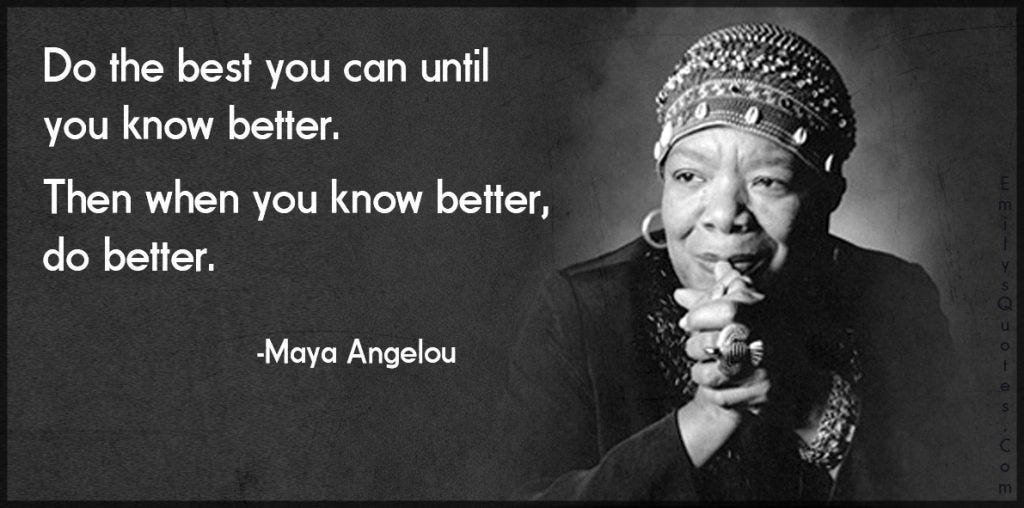
I’ve long loved the famous Maya Angelou quote:
One of the great lessons of adulthood for me was realizing just how complex humans are. As children, probably for the sake of safety, we tend to neatly divide people into (perceived) good guys and bad guys. It takes some work to come to terms with the fact that “good people” can do bad things and vice versa. Here again, context matters. Stealing because it’s the only way you can figure out to feed your starving child is markedly different than stealing out of meanness or just to be destructive.
As adults, we need to be able to do more than categorize people or actions at a surface level as good or bad. It’s useful to understand why things happen and how we can encourage more of the good stuff and discourage the bad stuff. We not only have to be able to point out mistakes but also identify what went wrong and initiate change when appropriate.
This isn’t always rocket science, by the way. Any parent knows that if one of your children announces that something bad happened: Johnny bit me! you will need to investigate a bit to learn what happened leading up to the bite. The same kind of process happens in court. It’s not uncommon for more than one party to bear some responsibility when something goes wrong.
On the other hand, it does take some effort, especially with big issues that require a great deal of coordination between groups of individuals who don’t always work well together. One particularly concerning trend is the, “To hell with it! Just burn it all down!” approach to problem-solving, which isn’t just lazy; it’s incredibly dangerous.
Knowing what went wrong and why—or the reasoning behind it—doesn’t solve the problem in and of itself, but it does put you (or the judge or the parent or society) in a much better position to do so.
With massive and complex problems, we also need to learn from the past. When have we seen or done something like this before? What helped things get better? What made things worse? Just because we’ve never personally experienced anything at this scale or never anticipated the need to face a particular challenge doesn’t mean someone else hasn’t already been through something similar that might serve as a cautionary tale for us.
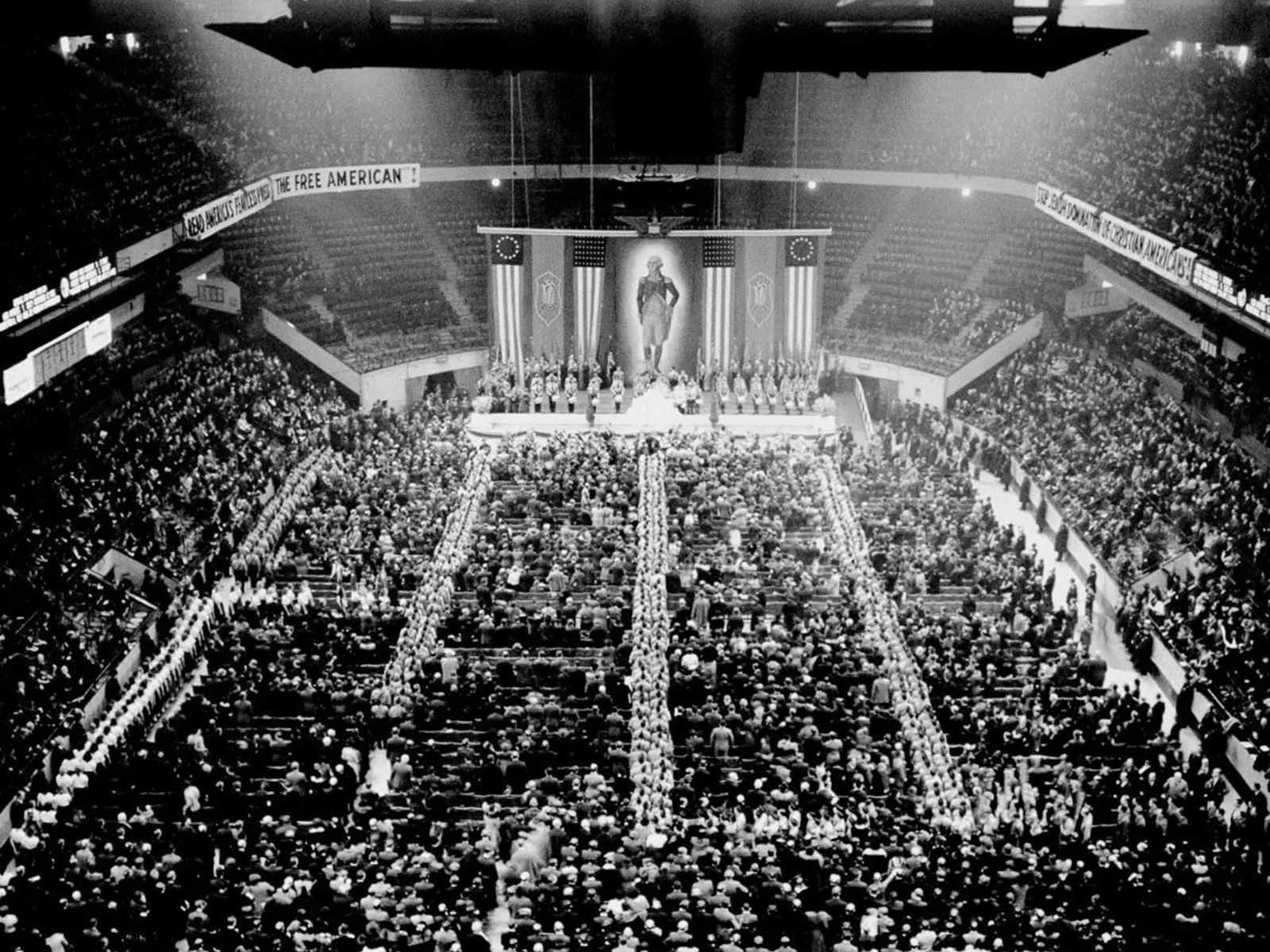
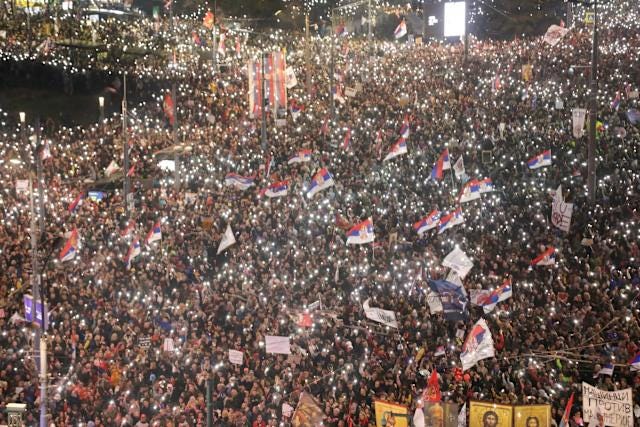
It’s hard to overstate the level of chaos and instability we are experiencing in the United States right now, from the federal government down to our households and communities, and it’s going to get worse before it gets better (assuming it gets better). Arguing over who should have seen what coming, however justified that may seem, isn’t productive. Clinging to what we’ve always done because we’ve always done it is equally unhelpful. And viewing enormous problems in isolation rather than against the backdrop of history and sociology will give us plenty to complain about but isn’t likely to shed new insights or provide meaningful solutions.
Context is key to identifying patterns, seeing how everything is interrelated, learning from the past as well as the present, and creating innovative and collaborative approaches to substantially improve the situation. That’s true whether you live in the US or someplace else and whether you are actively engaged in world events or more focused on putting food on your family’s table or dealing with a serious illness.
Maya Angelou said it so much better in her two sentences than I have here in a dozen or so paragraphs. Her simple, sage advice could truly be transformative, yet every day, I hear statements on television news from people who clearly know better than what they are saying.
Please note that Dr. Angelou didn’t teach us to do the best we can until we know better so we can hide until someone else solves the problem. She also didn’t say, Do the best you can until you know better. Then when you know better, think better.
As soon as we know better, informed by context, it’s our responsibility to do better.
What ah-ha moments have you had in the past 2 months?
Now that you know better, what will you do with that knowledge?

WOW!
Lenora
Great writing! This was heartfelt. It read easily and at the end paused the reader: CONTEXT OF WHAT MAYA WROTE.
I am going to share this More Tortoise, Less Hare on my Facebook page.
Eric